



What happens when public spaces become richer? Circular Economy Hub held Circular X “Circular economy and public luxury: Rethinking circular city-building from the perspective of ownership”
- On Feb 10, 2026
- Circular Cities, Circular Economy Hub, Circular Economy Trends, Circular X, event, Online Event, Ownership, Public Luxury, Social Value, Sustainable Cities, Urban Circular Economy, Wellbeing Economy
Circular Economy Hub has been hosting the monthly online learning program series “Circular X” since 2021, offering opportunities to explore the future of circular economy practices across various industries and sectors.
The theme for January 2026 was “Circular economy and public luxury: Rethinking circular city-building from the perspective of ownership.”
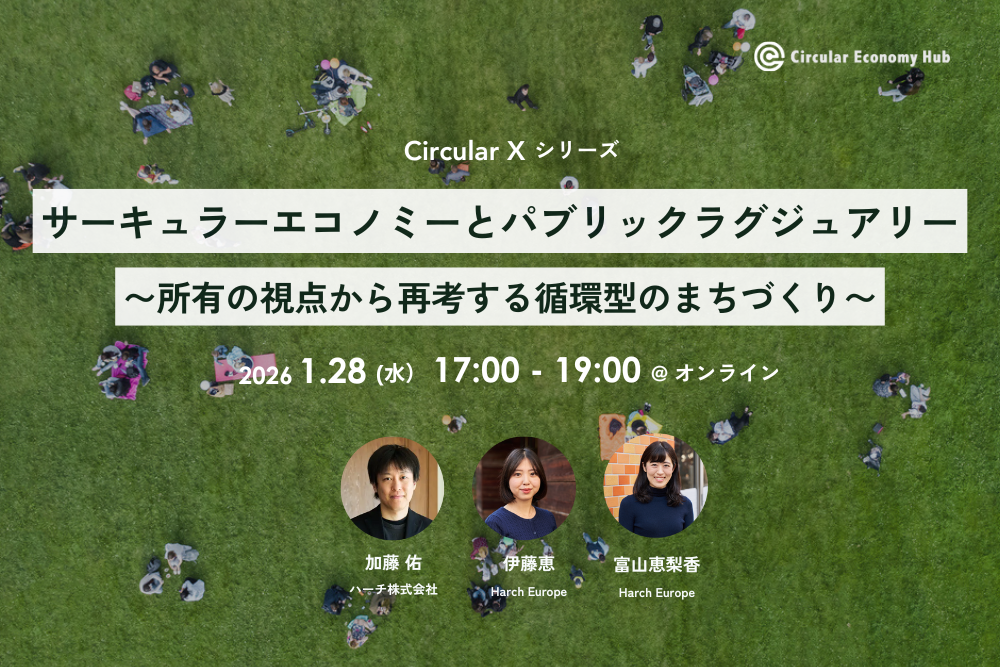
What happens when public spaces become richer? Introducing creative and advanced circular city initiatives from Japan and abroad
The circular economy, often referred to as CE, is frequently discussed from environmental perspectives such as the climate crisis and biodiversity loss, as well as from economic perspectives including resource security and innovation. In recent years, however, growing attention has been paid to the social value that the circular economy can generate.
One study reports that the number of academic papers focusing on the social dimensions of the circular economy, including social cohesion, equity, diversity and inclusion, and democracy and governance, increased from five in 2015 to 443 in 2023. This reflects expanding discussions on how the circular economy, as a new socioeconomic system, can deliver broad benefits to people.
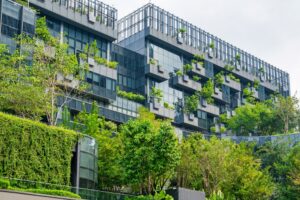
Cities account for more than three quarters of global natural resource use, over half of waste generation, and more than 60 percent of CO2 emissions. For this reason, transforming urban systems is essential to realizing the circular economy. Against this backdrop, concepts such as “circular cities,” which place the circular economy at the core of urban policy, and “circular neighborhoods,” which promote visible change through circular lifestyles and city making at the neighborhood level where people can see and engage with one another, have gained attention.
In this session of Circular X, the discussion focused on the concept of “public luxury,” which seeks sustainable environmental, social, and economic prosperity by prioritizing luxury in the public realm rather than in private consumption. The session explored how the circular economy challenges the fundamental concept of “ownership” that underpins the current capitalist system, and what perspectives are necessary to ensure that the promotion of the circular economy and circular cities delivers benefits to all people in an equitable and inclusive manner.
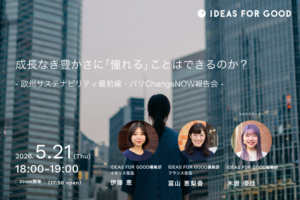
* What is public luxury?: Public luxury refers to a state in which society as a whole shares prosperity by emphasizing public spaces and shared resources rather than private consumption or individual luxury. The concept was proposed by British journalist and environmental activist George Monbiot as a counterpoint to “private luxury,” which focuses on individual consumption (Reference: IDEAS FOR GOOD What is public luxury? (in Japanese)).
During the event, the session examined the essential value of the circular economy and its conceptual challenges through the lens of ownership. It also introduced related concepts such as doughnut economics, wellbeing economics, post growth and degrowth, the 15 minute city, caring cities, and feminist cities, all of which are relevant to the idea of public luxury. In addition, advanced examples of circular city projects from Japan and abroad, including the United Kingdom, France, Spain, and Japan, were presented as references from a public luxury perspective.
Building on these discussions, participants reflected together on new economic and social systems and forms of governance as potential solutions, as well as the meaning and possibilities of public luxury within the Japanese context.
[Reference] Circular economy and public luxury: Rethinking circular city making from the perspective of ownership (in Japanese)
[Related Site] Circular Economy Hub (in Japanese)