


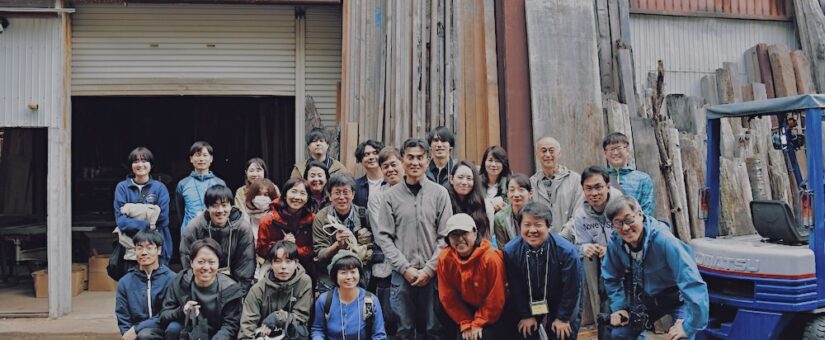
Event Report | “Lasting for a Thousand Years” Was Not the Goal, but the Result: Exploring Circular Economy Practices in the City of Kyoto
- On Jan 9, 2026
- biodiversity, Circular Business Design School, Circular Economy, Community Based Economy, Cultural Heritage, fieldwork, Forestry, Kyoto, Learning Program, sustainability, Traditional Craftsmanship, Urban Regeneration
As part of the Kyoto City project “building the foundation for a circular economy in 2025,” which Harch has been commissioned to deliver, Harch has been hosting a learning program for Kyoto based businesses themed around the circular economy titled Circular Business Design School Kyoto. In this article, we report on the fieldwork conducted in the city of Kyoto on October 31.
* This article is a republished report from IDEAS FOR GOOD, a web media platform operated by Harch that collects ideas to make society “better,” titled “‘lasting a thousand years’ was not a goal, but a result. circular economy seen in the city of Kyoto. CBDS Kyoto report” (in Japanese).
“Lasting a thousand years” was not a goal, but a result. circular economy seen in the city of Kyoto
A circular economy is not simply about repeatedly using things. At its foundation lie inherited skills and culture, as well as wisdom and relationships cultivated over long periods of time.
In order to gain such insights, participants of the hands on circular economy business development program Circular Business Design School Kyoto, hosted by Kyoto City and operated by Harch, ventured out into Kyoto City under autumn rain.
The setting for this fieldwork was the heart of Kyoto. From Kitayama cedar that has continued since the Muromachi period, to a Sukiya carpenter challenging himself to create together with customers, to an aburi mochi shop existing alongside a shrine, and a park attempting nature restoration in an urban environment. By visiting places where cycles have been inherited and newly created, participants witnessed diverse forms of “circulation” that connect the past to the future. This article shares the learnings from that day.
To the source of Kitayama cedar. learning an attitude of coexistence with nature from techniques 600 years old
After a 30 minute bus ride north from central Kyoto, the group arrived at their destination: the “parent cedar” of Kitayama cedar located at Nakagawa Hachimangu Shrine in Nakagawa, Kyoto, and the workshop of carpenter Kunimitsu Hata, who works on Sukiya architecture using wood from that cedar. Kitabayashi from COS KYOTO, the navigator for the day, began by saying, “To give you the conclusion first, all Kitayama cedar are clones.”
These clones are created through cutting propagation techniques, said to have been developed during the Muromachi period. This knowledge is so rare globally that researchers with doctoral degrees from Harvard and MIT once contacted them saying they wanted to “see the world’s first human cloning technology.”
Kitabayashi “Unless we think about how to apply technology to engage with nature, we cannot create circulation. I believe that the origin of that thinking can be seen in Kitayama cedar.”
Upon arriving at Nakagawa Hachimangu Shrine and walking further inside, a massive cedar tree standing quietly among the forest suddenly came into view.
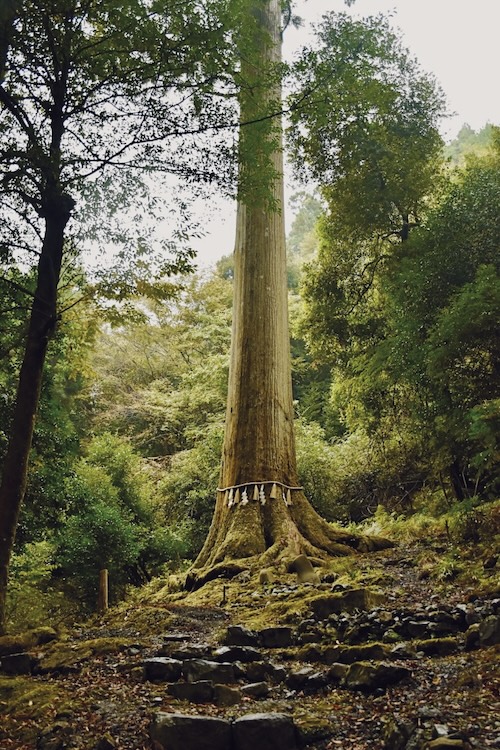
Hata “This is said to be the origin of Kitayama cedar, and it is about 600 years old. Kitayama cedar has long been produced using a cutting method where branches are cut and planted directly into the ground to create identical clones.”
This production method was established to mass produce wood with special characteristics, such as smooth polished logs and naturally textured wood often used for tokobashira. It was created through a deep understanding of nature at a time when the concept of DNA did not yet exist. People have decorated this parent tree with sacred ropes, offering gratitude while continuing forestry in this land.
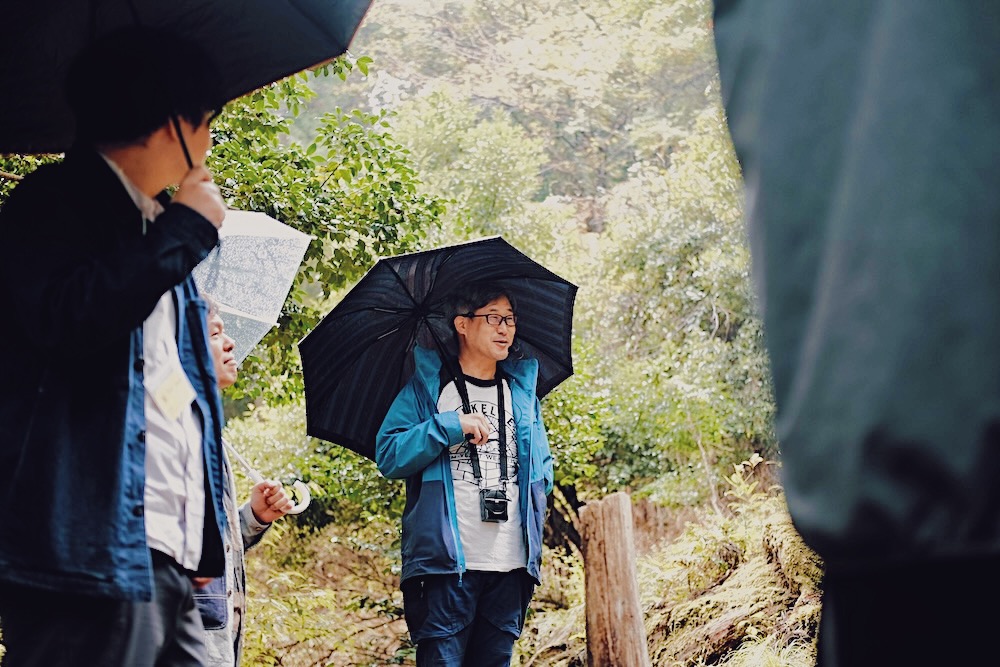
Kitabayashi, who planned this tour. photo by author
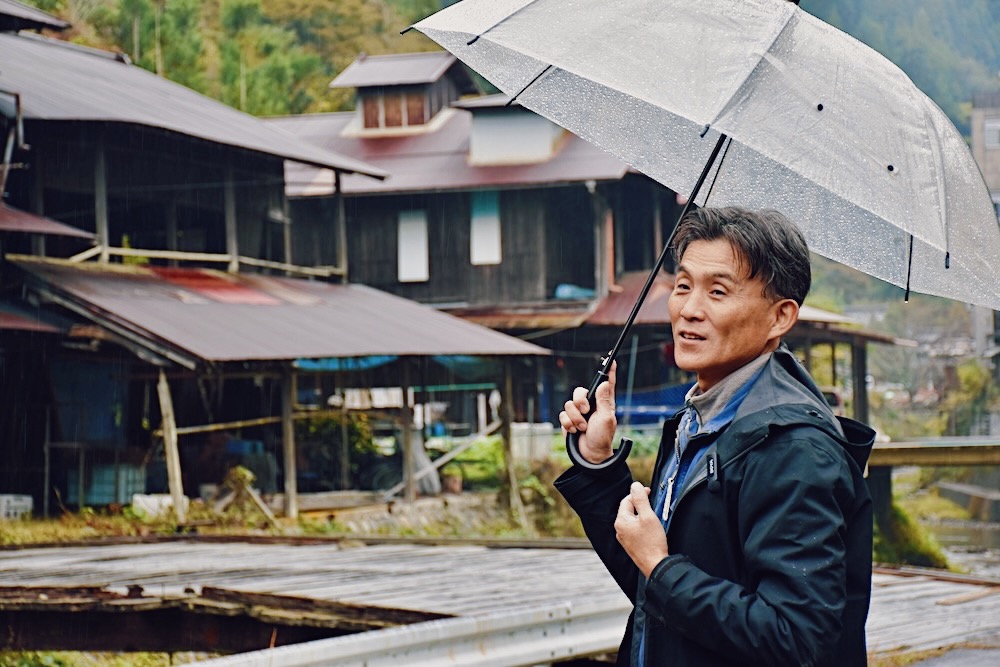
Hata explaining the parent cedar of Kitayama cedar and local forestry at Nakagawa Hachimangu Shrine. photo by author
However, this wisdom and technique cannot be maintained without continuous human involvement. While well maintained Kitayama cedar forests spread across the slopes, there are also many neglected cedar forests where branches have not been pruned. When cedar forests developed for forestry are abandoned, they do not return to their original ecosystems, instead becoming dark forests with low biodiversity, which can also drive wild animals into urban areas.
Because Japanese forestry was long pressured by inexpensive imported timber, the industrial system of cutting trees in the mountains, processing them, and delivering them to cities has now been fragmented. Hata expressed concern over this situation.
Hata “Japan has plenty of trees, yet we import wood from overseas. I think something strange is happening. I really wonder why circulation does not happen within Japan.”
On the other hand, Kitayama cedar faces another issue. As the Japanese economy declined, people moved away from tatami rooms and the population practicing tea ceremony decreased. As a result, buildings using Kitayama cedar have drastically decreased, putting the very survival of the material at risk.
The techniques that predecessors learned from nature, and the modern issues that arise when we become disconnected from them. Kitayama cedar highlighted both the light and shadow of circulation created by whether humans remain engaged with nature.
Tradition means protecting essence while weaving new value
Leaving the Kitayama cedar forest, the group visited Hata’s workshop. Hata is a Sukiya carpenter specializing in Sukiya architecture represented by tea rooms. However, his work extends beyond tea rooms. By blending techniques passed down from predecessors with modern architecture, he continues to capture people’s hearts.
For example, in the interior of a sushi restaurant, he symbolically placed a single old chestnut pillar once used as an inagi, a post used to support harvested rice during drying.
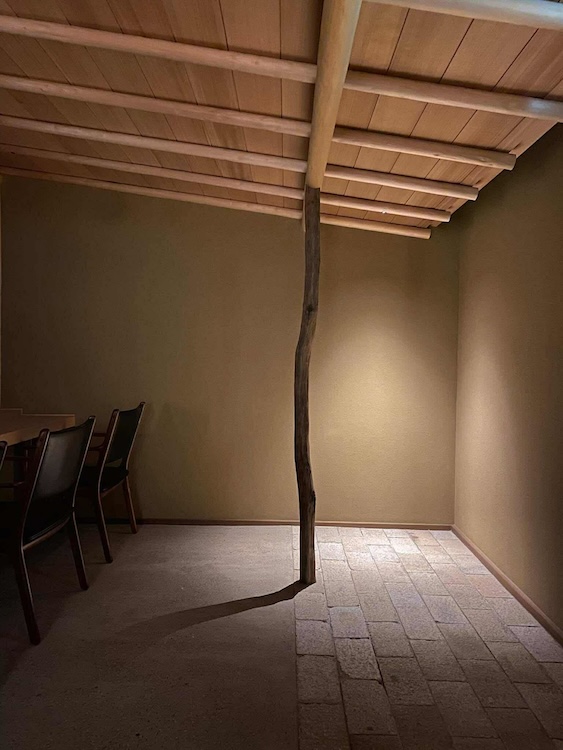
Image via Kyokoto Co., Ltd.
Hata “Rice is essential for a sushi restaurant, so I really wanted to include this one pillar as a symbol of supporting rice. This is not about being eccentric. Giving meaning to weathered materials shaped by human life is my playful expression of Sukiya. We usually aim for architecture that does not assert itself too strongly. Architecture that coexists with nature, preserves the beauty of natural materials, and feels as though you are in a forest or mountain while being filled with aesthetic sensibility. While protecting the main function of the place, we aim to blend with nature. The representative wood used in such non assertive architecture like Sukiya and tea rooms is the polished log of Kitayama cedar.”
Listening to the voice of materials and considering harmony across the entire space. This sense of balance is likely the essence of a Sukiya carpenter.
In recent years, Hata rescued a replica of the national treasure tea room Taian, which had been created for vibration experiments following lessons from the Great Hanshin Awaji Earthquake, from being discarded. He named it “T an,” the dancing tea room. It was even considered for exhibition at the Venice Biennale. He has also been involved in projects scientifically proving the earthquake resistance of traditional architecture. The seismic isolation structure where pillars are simply placed on stones is wisdom developed by predecessors to dissipate earthquake vibrations.
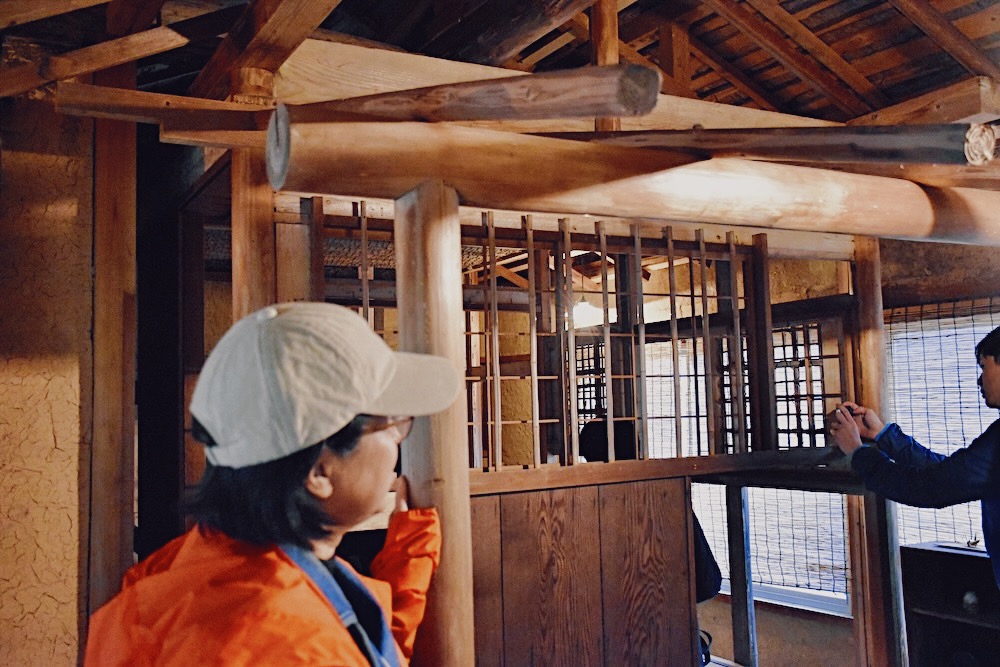
This tea room named the dancing tea room was also considered for exhibition at the Venice Biennale. photo by author
Protecting tradition does not mean stubbornly clinging to a single method. It may mean understanding and preserving the essence while continuously creating new value by blending with contemporary technology and sensibilities.
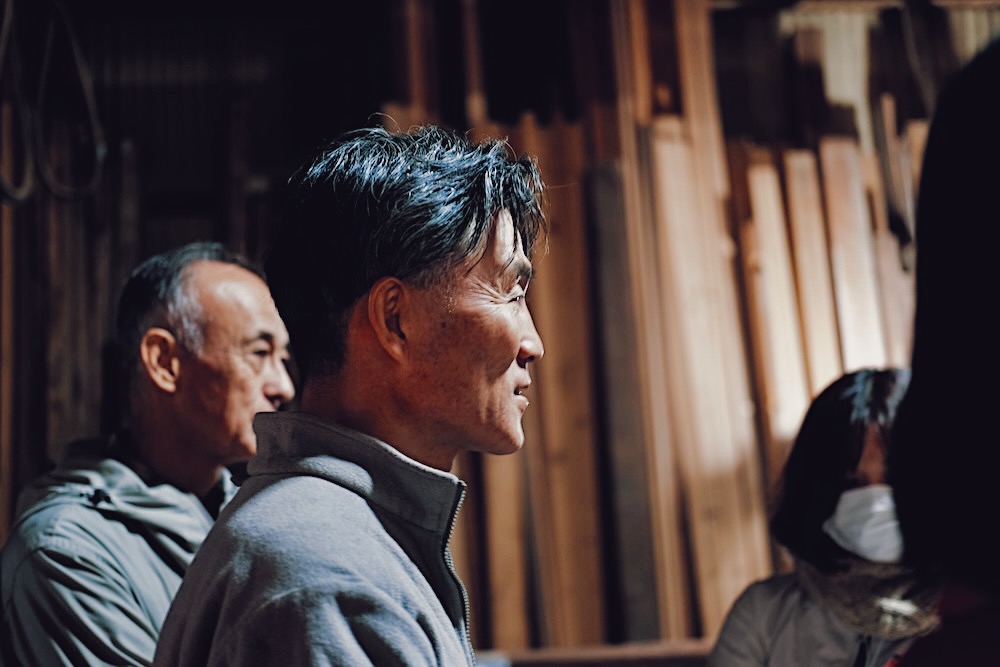
Time spent closely observing wood and engaging in deep conversation with participants at Hata’s atelier
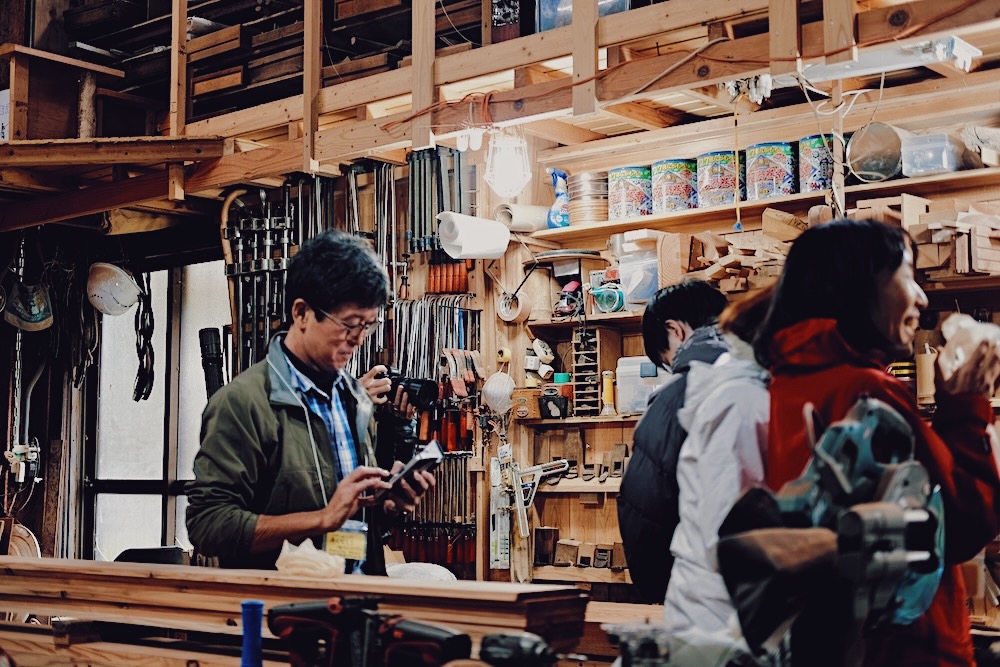
Tools neatly arranged in the atelier. photo by author
Once humans intervene in nature, continued human engagement allows circulation to occur and a healthy state to be maintained. Craftspeople like Hata who continue to care for trees demonstrate one possible response to the environmental challenges facing Kitayama cedar as humans grow distant from nature. Learning from this attitude, how can we pass on “circulation with nature,” which is at risk of fading, in modern society? And how can we express its value to connect it to the future?
These were questions difficult to immediately put into words, which each participant seemed to receive through their senses.
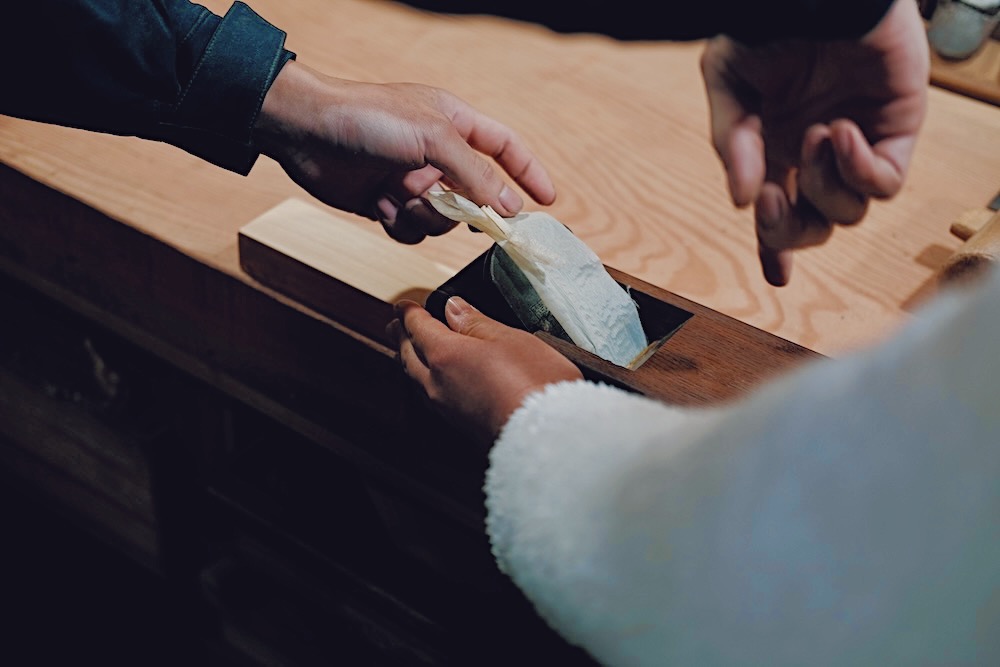
Participants also experienced planing wood. photo by author
Unraveling an economic sphere that lasts a thousand years by staying close to the community
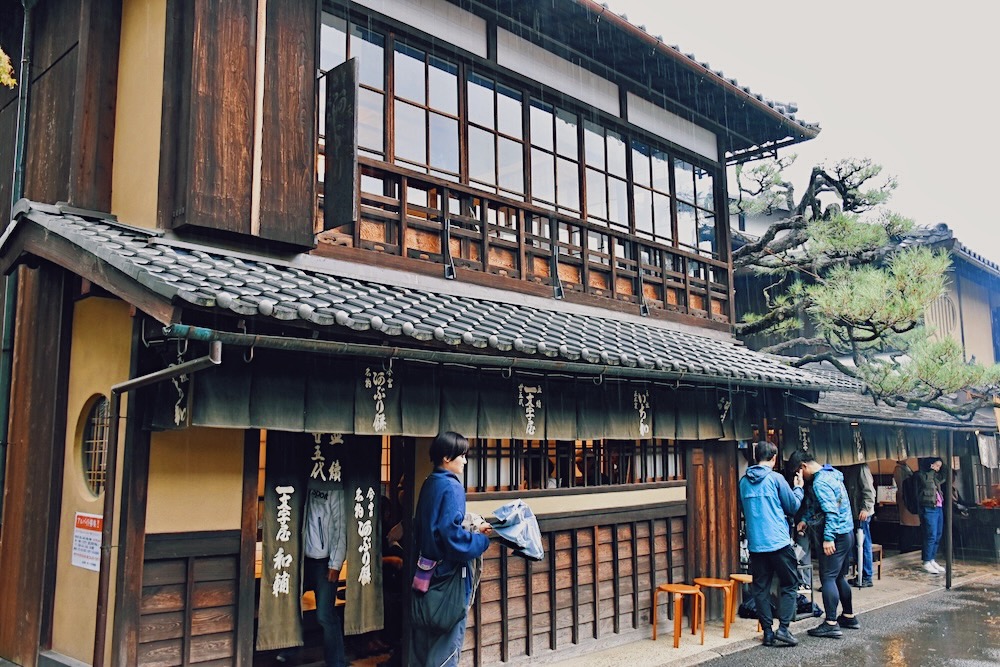
Next, the group visited Imamiya Shrine in Murasakino, Kita Ward. Passing through the shrine grounds, they found an aburi mochi shop standing opposite each other. It is Ichimonjiya Wasuke, founded in the Heian period around the year 1000, affectionately known as Ichiwa.
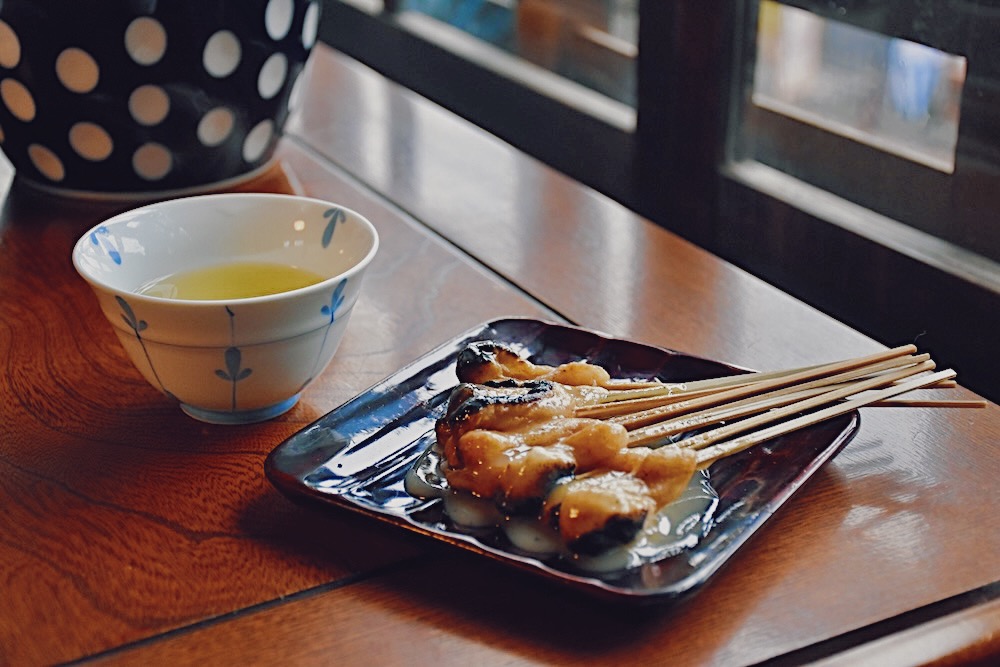
Aburi mochi. photo by author
The origin of this shop lies in offering leftover rice cakes that had been presented to the gods during festivals to worshippers. The business was born purely from service.
The 25th generation proprietress, Ms. Hasegawa, welcomed the group.
Hasegawa “We offer sacred food and then receive the leftovers, but since the rice cakes were hard, they were first pounded, made smaller, and grilled. At the time, sugar was not available, so common people enjoyed them with only the sweetness of white miso, and it is said that epidemics subsided. That is how it began.
Even today, during annual festivals, we wake up early to bring sacred offerings. If we do not move, the portable shrine does not move. That this continues generation after generation is something we are grateful for.”
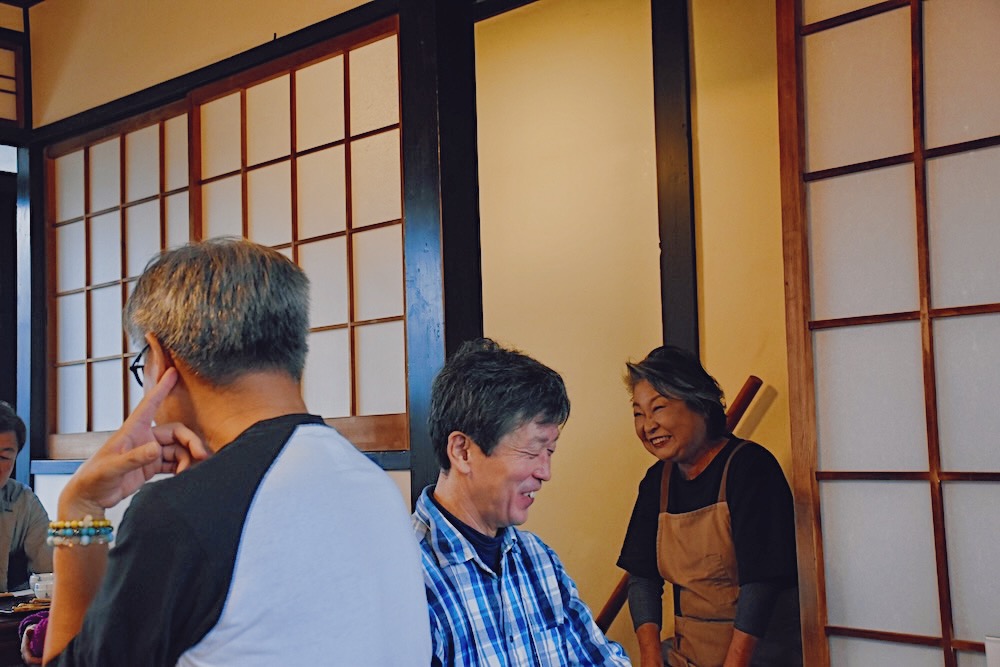
Ms. Hasegawa speaking about Ichiwa, on the right. photo by author
Over its more than thousand year history, the shop has faced crises many times. They overcame them by dividing roles between those who worked outside to support livelihoods and those who stayed home to continue service.
When instructed by the health center regarding hygiene for making rice cakes at the storefront, she laughed and said, “In a thousand years, no one has gotten sick from this. We are older than the health center.” Still, they adapted by moving production indoors. Flexibility to change with the times is necessary, while unchanging elements continue to be protected.
Hasegawa “Keep the core unchanged, and just adapt to each era. But make sure there is one firm line running through it. Otherwise, the business will break.”
Continuing the business itself was not the goal. It lasted a thousand years because it protected what the community needed and valued. The history of Ichiwa may reflect harmony between economy, culture, and community.
Thirty years of experimentation at Umekoji Park to restore a forest of life from zero
At the end of the fieldwork, the group headed to Umekoji Park. Once a vast rail yard, this site has transformed into a nature rich park over the past 30 years.
As Kitabayashi said, “In conclusion, nature can be restored,” the group walked through the park and entered the Forest of Life. Here, various experiments are conducted to restore the land’s original ecosystem by minimizing human management.
Thirty years ago, this area was covered in concrete. Today, over 600 plant species, 80 bird species, and 380 fungal species have been confirmed. Biodiversity is steadily returning in the heart of the city.
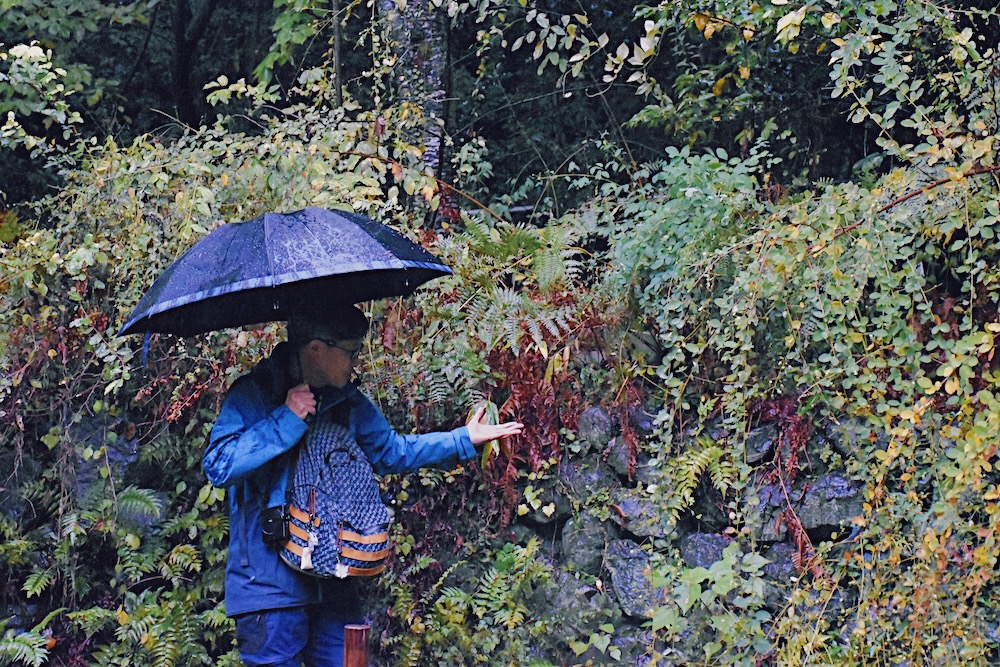
Traditional stone stacking allows water to drain properly, preventing landslides. Plants take root in the gaps, becoming habitats for living creatures. photo by author
On the other hand, some areas of the park have compacted soil where vegetation does not grow. To address this, Kitabayashi and others have been working on citizen participatory soil improvement workshops.
They first drive stakes around trees to create pathways for water and air in the soil. Pruned branches are arranged in a lattice around the stakes and filled with fallen leaves. Microorganisms then decompose the leaves, enriching soil nutrients. This loosens soil that had hardened and prevented rainwater infiltration, allowing greenery to sprout again.
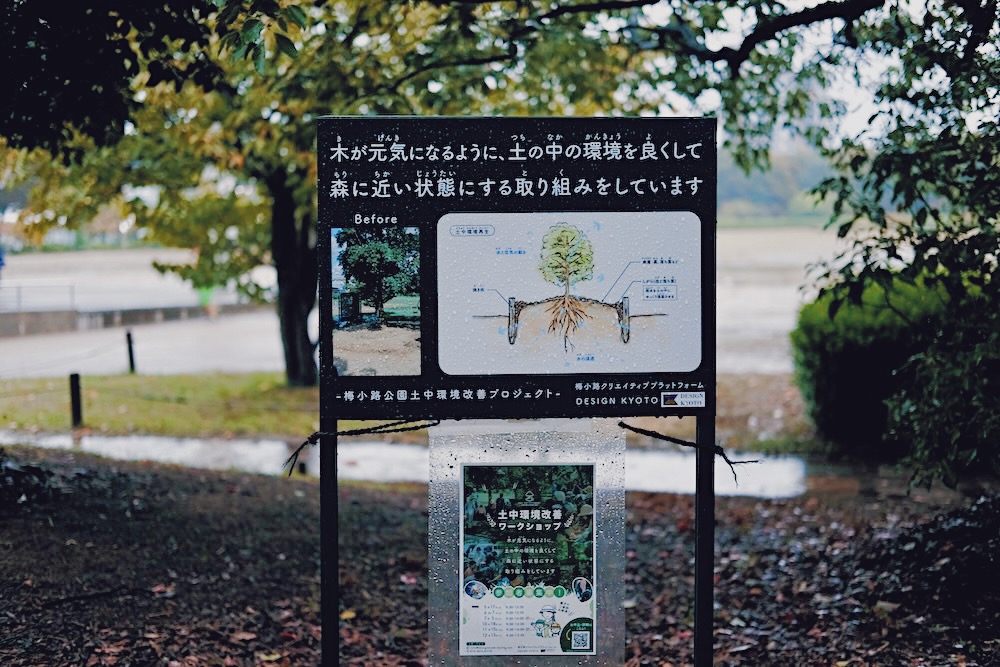
Soil improvement project underway beneath this sign. photo by author
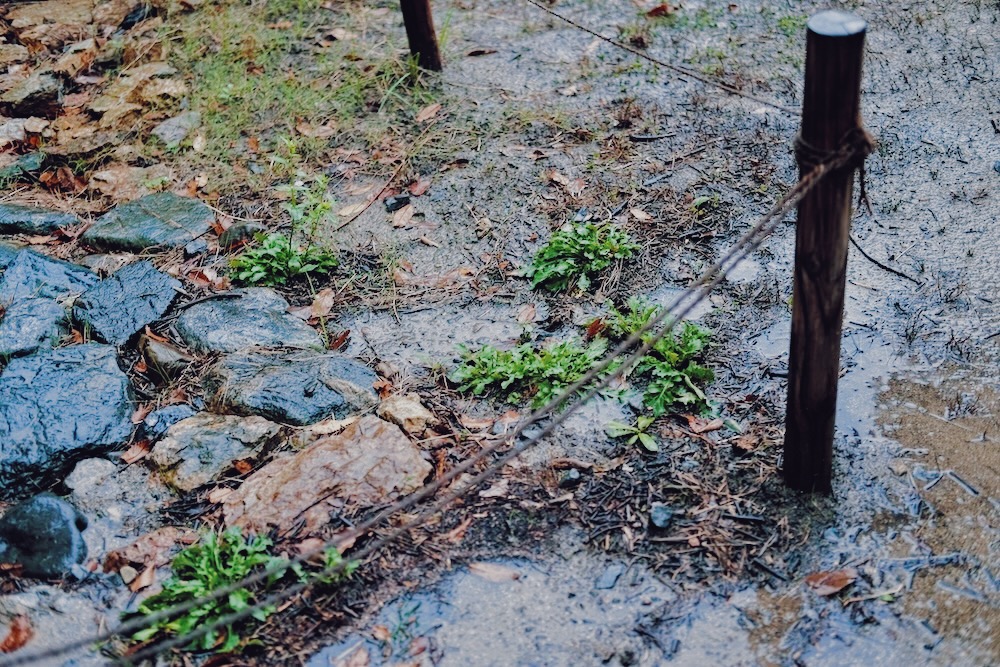
Experiments also place stones to send air into the soil. Vegetation grows where stones are placed. photo by author
Kitabayashi “If humans intervene and create conditions where living things can properly survive, plants and animals will always respond. If you prepare an environment where life can exist, everything can live. The same applies to humans. It is difficult to grow plants exactly as convenient for us. Preparing the environment is what truly matters.”
Another challenge is food loss from events held in the park. The Kururi Resource Project aims to compost this waste and reuse it in flower beds and the satoyama area of Kyoto Aquarium, creating on site resource circulation. However, some vendors began over ordering food, thinking excess would simply be composted. A system meant to reduce waste risked encouraging food loss instead.
Kitabayashi “Originally, the idea was to compost unavoidable waste and aim for zero waste. But if we neglect efforts to communicate that intention, people quickly drift toward the easier option.
If that happens, the sustainability of motivation among those working on composting cannot continue. So it is not enough to just build systems or do good things. We need to create enjoyable forms that allow intentions to continue. That is the challenge we are working on now.”
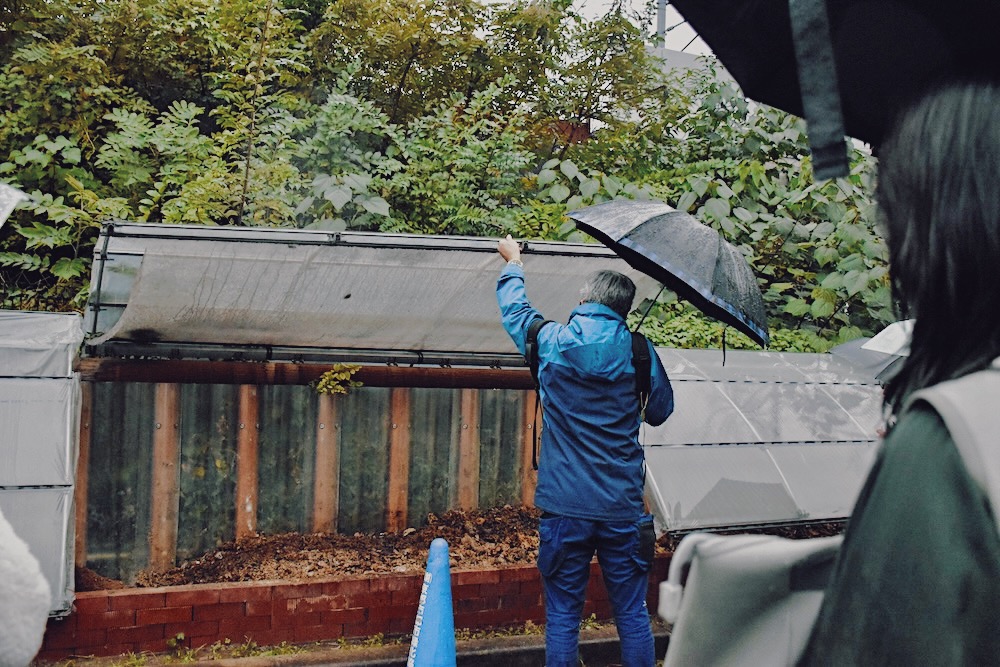
The initiatives at Umekoji Park show hope for nature restoration. At the same time, they highlighted challenges that cannot be solved by systems or technology alone, namely changes in human awareness and behavior, which must be overcome to implement a circular economy.
What do we pass on to future generations
At the end of the day, participants reflected on what they had learned. Keywords that emerged included “flexibility that circulates while swaying,” “reconnecting with daily life and culture,” and “role sharing and putting the right material in the right place.” Amid diverse perspectives, one question was raised.
“Do we really need to aim to continue for a thousand years? Perhaps it is more important that something continued for a thousand years as a result of being needed for a meaningful reason.”
Kitayama cedar, Hata’s Sukiya craftsmanship, and Ichiwa’s aburi mochi were not continued with longevity as the primary goal. They have connected to the present as a result of facing nature, responding to people’s feelings, and serving their communities. The activities at Umekoji Park may be standing at the entrance to that same path.
One of the tools that supported building those relationships was something connected to circulation. Rather than viewing a business as an isolated entity, it becomes an expression of how one is supported by relationships and how one behaves to pass them on to the next generation. The totality of these connections may be what allows things to circulate as a business and as a community.
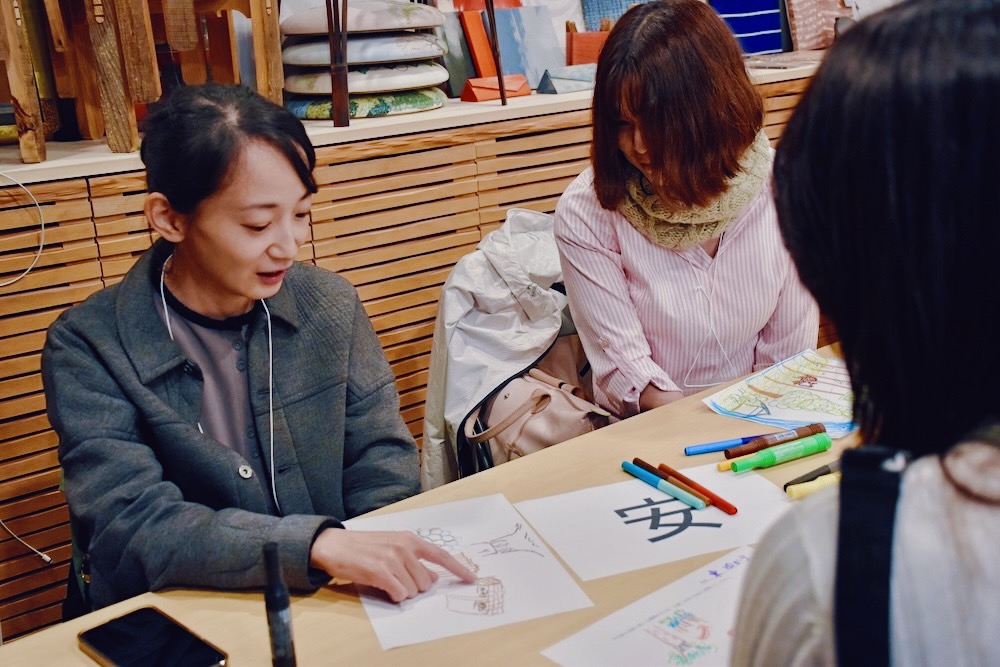
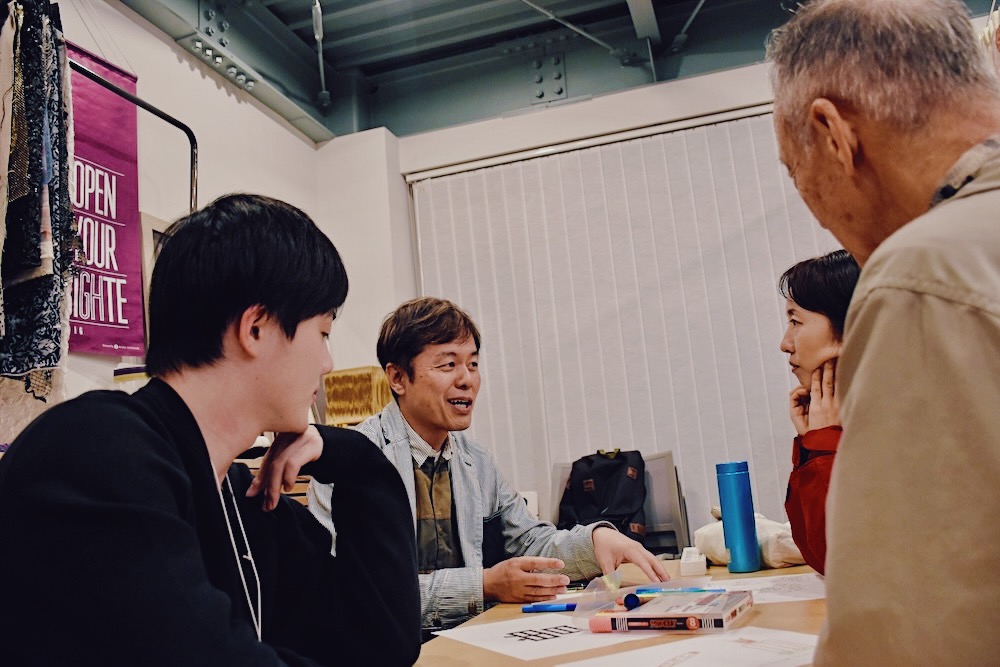
Rather than pursuing economic rationality alone, the question is within what kind of ecosystem one positions the circulation of one’s own business so that it becomes economically sustainable as a result. Holding the questions gained in the streets of Kyoto close, the exploration of CBDS Kyoto continues.
Next, as the second fieldwork, the group is scheduled to visit Keihoku. What kinds of nature and human activities form the quietly rooted sources of circulation in everyday living areas? We will continue reporting through future articles.
About Circular Business Design School Kyoto
Kyoto has assets cultivated over 1,200 years, such as the spirit of “shimatsu no kokoro” (frugality), circular ways of living, and craftsmanship traditions that continue to shine across generations.
To create the circular future now demanded by global challenges like climate change and biodiversity loss, it is essential to harness this wisdom and apply it to the present with creativity.
Harch has launched the Circular Business Design School Kyoto in October 2025, a learning program that combines Kyoto’s heritage of circular wisdom with cutting-edge insights in circular economy to co-create the desired future.
Decode Culture, Design Future: Unravel wisdom and design innovation. Together from Kyoto, let us envision a circular future that extends beyond tradition.
【Related Articles】IDEAS FOR GOOD “Kyoto’s 1200 year history holds clues to the circular economy: A vision for a future where environment and industry coexist” (in Japanese)
【Related Articles】IDEAS FOR GOOD “Special Dialogue: Exploring the future of Kyoto-style circularity with Akihiro Yasui” (in Japanese)